Please ensure Javascript is enabled for purposes of website accessibility

Category: Health and Wellness

  • Four tips from a physical therapist for living with arthritis in the back

    Four tips from a physical therapist for living with arthritis in the back

    Arthritis in the back, also known as spinal arthritis, can make life difficult for so many reasons. In addition to localized aches and stiffness, the inflammation of spinal facet joints and development of bone spurs can cause nerve compression that leads to debilitating and painful radiating symptoms. Although these symptoms can be difficult to live with and can affect your ability to perform daily activities, it’s important to keep a positive mindset. 

    While arthritis in the back is not a reversible condition, patients who have been diagnosed with this condition can still learn to manage it. One great form of treatment for people living with arthritis of the back is physical therapy. By working with an experienced and licensed therapist, spinal arthritis sufferers can receive care that helps them improve function, relieve pain and increase mobility. 

    Practical treatment advice for patients with arthritis in the back

    Here are some frequent tips and recommendations that patients seeing a physical therapist for back pain relief can encounter: 

    1. Stay active — While the symptoms of arthritis may make it feel like exercise is the last thing you want to do, not becoming overly sedentary can be highly beneficial over the long term. Regular activity keeps blood flowing to your back, helps relieve stiffness and can reduce muscle atrophy. 
    2. Strengthen your core — Supporting muscles do so much to relieve pressure on the spine. A strong core helps arthritis by reducing stress on the joints, which can lessen symptoms. 
    3. Improve your posture — Another source of unneeded strain on the spinal joints is slouching and other postural issues. Good posture lengthens the spine, which helps to evenly distribute your weight and take pressure off the joints.
    4. Stay flexible — Regular stretches help mobilize the joints and soft tissue in the spine to help improve mobility and function in the back. 


    A physical therapist has the training and experience to help you achieve all of the above in a safe and supervised environment. Therapeutic exercise is extremely important, but it must be done correctly to be fully effective. Physical therapists can also perform passive techniques to help relieve arthritis that cannot be performed alone.

    Get expert treatment for arthritis in the back 

    At Whatcom Physical Therapy, our caring and dedicated team has decades of combined experience in helping patients successfully live with arthritis in the back. This condition does not have to take you out of your life. With personalized care and guidance, we can help you achieve your treatment goals and find long-term relief. 

    Contact us today to learn more and schedule your initial appointment with one of our friendly representatives. 

  • Three exercises to avoid to keep tennis elbow from worsening

    Three exercises to avoid to keep tennis elbow from worsening

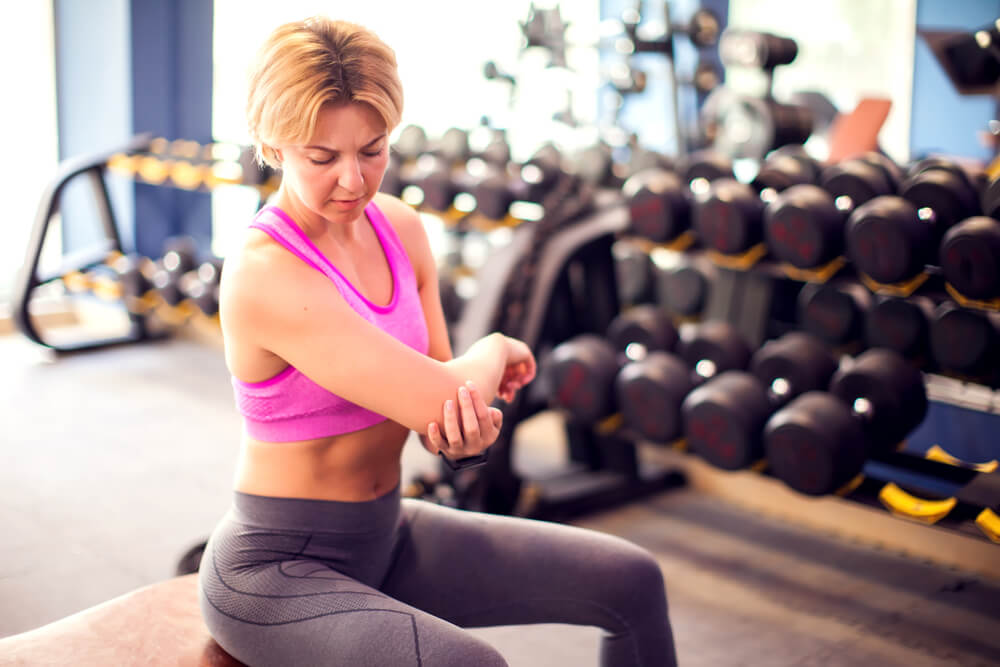
    Pain on the outside of the elbow. Stiffness in the elbow when waking up in the morning. Increased elbow pain when grasping objects or repeatedly moving the elbow. If you have all these symptoms, it’s a good bet that you have a condition called lateral epicondylitis. 

    More commonly, this condition is called tennis elbow. It’s estimated that up to 3% of the U.S. population develops this condition every year. This means that almost 10 million Americans could develop tennis elbow this year based on current population statistics. Physical therapists often use exercises to treat tennis elbow. However, there are certain exercises your therapists might recommend that you avoid to keep your tennis elbow from getting worse. 

    What are some exercises you should avoid to keep tennis elbow from worsening? 

    The therapeutic exercises that therapists typically prescribe for tennis elbow are designed to be gentle. They can also help stretch and strengthen the forearm muscles and elbow ligaments affected by this injury. However, there are certain types of exercise therapists typically avoid when working with tennis elbow patients. Three of these are:

    1. Repetitive weight-bearing exercises — Many exercises involve holding up most of your body weight while moving your arms. The chin-up is one common example. Pushups are another example of a common exercise that falls into this category. For tennis elbow patients, such exercises place a lot of stress on the injured elbow. This stress can slow down your recovery or even injure your elbow further. 
    1. High-weight wrist exercises — Physical therapists often prescribe wrist exercises as part of a tennis elbow therapy plan. However, the exercises they prescribe are done with little or no weight. You might be used to doing barbell extensions and other exercises that use a lot of weight, but you’ll want to avoid them during your recovery. If you don’t, it’s possible that your recovery could be longer than you thought. 
    1. Straight-arm exercises — Straight-arm exercises like planks are popular for building core strength. Other exercises in this category, like pullovers and L-sits, are popular for building arm strength. However, doing these types of exercises is a no-no when you have tennis elbow. Straight-arm exercises require that you hold your arm rigid for extended periods of time. This places a huge amount of pressure on elbow tendons and forearm muscles, which can impede your recovery. 

    Panther Physical Therapy can help you figure out which exercises to avoid with tennis elbow

    The exercises that should be avoided if you have tennis elbow will depend on how it’s affecting you specifically. Our team at Panther Physical Therapy can help you figure out which exercises will and won’t work for you. We’ll start by having you come into one of our clinics for a free screening. The data we gather in this screening will then be used to build a personalized therapy plan for your tennis elbow. 

    Are you ready to start getting our help with your tennis elbow treatment? Contact our team today for more information or to schedule your free screening.

  • What should you wear to pelvic floor therapy?

    What should you wear to pelvic floor therapy?

    The pelvic floor is a hammock-like structure of soft tissue in your lower torso. It’s designed to help hold organs like the rectum, bladder and bowels in place. However, the pelvic floor can become overstretched or tense, which can lead to a variety of issues. In fact, myofascial pain in the pelvic floor is reported to be responsible for up to 23% of chronic pelvic pain cases (Harvard Health, 2018). It has also been shown to be the root cause of 78% of cases of a bladder condition called interstitial cystitis (Harvard Health, 2018). 

    Pelvic floor physical therapy has been shown to offer effective pelvic pain reduction. One study showed that at least two sessions of this type of therapy produced pain relief in 63% of its participants. Before you start this pelvic floor therapy, you might be wondering what you should wear to your appointments. This question isn’t as silly as it might appear. 

    Three tips on what you should wear to pelvic floor therapy

    It’s estimated that pelvic floor therapy lasts for about six to eight, hourlong appointments on average (Harvard Health, 2018). Since you’ll be going to multiple sessions, it’s not a bad idea to consider what you should wear to pelvic floor therapy. Here are three clothing tips that can help keep you as comfortable as possible during your sessions:

    1. Wear loose, comfortable clothing — Pelvic floor therapy sessions could involve doing specific therapeutic exercises. These exercises might require you to get up and move around. Loose, comfortable clothing is a good option for your sessions because it can reduce chafing during these movements. This type of clothing can help decrease movement restrictions as well. 
    1. Wear comfortable shoes — It’s harder and more uncomfortable to do therapy exercises in shoes that aren’t designed for exercise. Wearing shoes that are intended for exercise can help increase your comfort level. The shoes you wear should also provide good foot support. Additionally, you might want to consider wearing shoes that are fairly easy to take off. This can be helpful if therapists intend to perform internal manipulations that will require removing your pants. 
    1. Wear warm socks — When therapists do internal manipulations, you’ll typically be given a covering for your lower body. However, your feet will be exposed during these manipulations. This exposure can lead to uncomfortable cold feet due to the clinic’s temperature or cold floors. For this reason, patients coming to pelvic floor therapy are encouraged to wear warm socks. 

    Find high-quality pelvic floor therapy at Advent Physical Therapy

    Are you wondering what you should wear to your pelvic floor therapy session? Our Advent Physical Therapy team is ready to answer this and other questions for you. We can also provide you with a free screening, which is intended to reveal the source of your pelvic issue. Additionally, our team can create a personalized pelvic floor therapy plan to address your issue. 

    Contact our team today for more information or to schedule your free screening.

  • Which exercises work best for elderly spinal stenosis patients?

    Which exercises work best for elderly spinal stenosis patients?

    Feeling pain in your lower back, buttocks and upper thigh could be signs that you have lumbar spinal stenosis. The likelihood is even higher if the pain doesn’t run down the leg, since this rules out other issues like sciatica. As many as 500,000 Americans could currently have spinal stenosis, and it’s especially common in older people. 

    Surgery is one option that can help spinal stenosis patients. However, a recent medical study reports that physical therapy is just as effective as surgery for lumbar spinal stenosis. In addition, the study claims that physical therapy can also lead to fewer complications for elderly patients. One type of physical therapy that can help elderly spinal stenosis patients is therapeutic exercises, and there are two exercises in particular that can help treat this condition. 

    1. Seated lumbar flexion

    Exercises that focus on flexion or bending of the lower back can help elderly people treat spinal stenosis. This type of bending can help decompress the lower back vertebrae, and it can help reduce nerve pinching that could be the source of your pain. One exercise that your therapist might recommend is seated lumbar flexion. 

    Steps for performing the seated lumbar flexion exercise

    • Sit up straight on a stable chair or bench. Make sure that both your feet are flat on the floor and your toes are facing forward. 
    • Slowly bend forward from the waist, and stop when you feel a stretch in your lower back. Your ultimate goal should be to place your hands on the floor.
    • Hold this position for two to three seconds. 
    • Return to the starting position.
    • Repeat these steps until you’ve done 10 repetitions of the exercise. 
    1. Pelvic tilt

    Another gentle exercise that can help elderly patients with spinal stenosis is the pelvic tilt. The goal of this exercise is to strengthen the muscles in your core and lower back. In turn, stronger muscles in this area provide more support to the spine, and this can help reduce spinal stenosis symptoms. 

    Steps for performing the pelvic tilt exercise

    • Lie on your back on a bed. Your arms should be at your sides, and your legs should be straight to start out. 
    • Slowly pull both legs up toward your stomach so that your knees are bent. Your feet should be flat on the bed. 
    • Engage your stomach muscles to tilt your pelvis backward. It should feel like you’re pulling your belly button toward the mattress.
    • Hold this position for two to three seconds. 
    • Slowly release your stomach muscles and allow your pelvis to return to its normal position. 
    • Repeat these steps until you’ve done 10 repetitions. 

    Excel Sports & Physical Therapy can help elderly people find effective spinal stenosis exercises

    Elderly patients with spinal stenosis don’t have to guess about which exercises will be most effective. Our team at Excel Sports & Physical Therapy can help you in this and many other ways. We offer free screenings that can help reveal the symptoms your spinal stenosis is causing. Our team can also build you a personalized therapy plan that uses exercises and other beneficial therapy methods to treat your symptoms. 

    Are you ready to start getting our help with your spinal stenosis? Contact our team today for more information or to schedule a free screening. 

  • Three tennis elbow exercises you should avoid to prevent making the pain worse

    Three tennis elbow exercises you should avoid to prevent making the pain worse

    If you’re dealing with tennis elbow, the right combination of rest and therapeutic exercise can go a long way toward helping the recovery process. Working with a skilled and experienced physical therapist can help you develop an effective plan that helps improve functionality and injury resistance. However, it’s important to understand that some types of exercise can actually worsen the injury and potentially make your pain even worse. 

    While there’s no substitute for working with a professional, we’re happy to share the following overview of three types of tennis elbow exercises that you should absolutely stay away from. As you read this information over, please feel free to get in touch with us if you have any questions or would like to learn more about your treatment options. 

    Stay away from these types of exercises if you have tennis elbow

    While you may think that any type of arm strengthening exercise will make you more resistant to tennis elbow, there are some that can put excessive strain on the wrists. These include:

    1. Straight arm exercises — Any type of exercise that requires keeping the arms straight and the elbow fully extended is bad for tennis elbow. This is because it increases the strain on the same muscles and connective tissue that are trying to heal. 
    2. Bench presses and pushups — These types of exercises put tremendous strain on the wrists, forearms and elbows. This is especially true if improper form is used. 
    3. Rowing exercises — These exercises are very similar to the types of motions that actually cause tennis elbow, putting excessive stress on the elbow tendons. 

    With any type of exercise, if it causes actual pain, don’t do it. Since they are biomechanical experts who understand the functioning of your musculoskeletal system, physical therapists can provide the guidance to distinguish exercises that help from the ones that hurt. 

    Tennis elbow relief from our experienced team

    When you come to Specialists in Sports and Orthopedic Rehabilitation, our therapists can provide highly personalized treatment plans that can help you overcome repetitive motion injuries like tennis elbow. We can perform a detailed evaluation that helps you better understand your condition and how the right types of exercises and manual therapies can encourage recovery and healing. Once you get on the right treatment path, you’ll be surprised how quickly you start to see results. 

    To learn more about tennis elbow relief, contact us today and schedule your initial appointment.

  • Three exercises to avoid with sciatica

    Three exercises to avoid with sciatica

    Have you experienced a shooting pain burning its way down your leg? You might not know it, but this particular symptom is a strong sign that you have sciatica. 

    Sciatica is a condition where the sciatic nerve is pinched or irritated. This nerve runs from the lower back and down the back of your leg to your feet. At any point, the sciatic nerve can be pinched or irritated, but it most commonly happens in the lower back. Although physical therapists often prescribe exercises to help reduce sciatica symptoms, there are three exercises they’ll likely tell you to avoid while you have sciatica. 

    Therapists recommend avoiding these three exercises with sciatica

    Avoiding all exercises when you have sciatica isn’t something you should do. One goal of physical therapy for this condition is to get you moving again. A medical study reveals that 79% of the participants who received physical therapy reported significant improvements in their sciatica. But this doesn’t mean that all exercises and therapy techniques are created equal. Some exercises your therapists might encourage you to avoid include: 

    • Bent-over rows — This exercise involves lifting a weighted barbell or a set of dumbbells while bent over at the waist. The goal is to increase the strength of arm, shoulder and back muscles. However, adding one pound of weight means you’re creating 10 pounds of extra stress on your back when you bend over. Thus, the added stress the bent-over row can cause makes it one that sciatica patients should skip until they recover. 
    • Double leg lifts — Doing double leg lifts can be helpful for strengthening your core. This exercise specifically targets abdominal muscles and lower back muscles. However, weakness in these muscles can add stress to your back when you’re doing a double leg lift. In turn, this added stress can lead to an increase in sciatica pain. 
    • Leg circles — Moves that require you to make circles with your legs are common in many yoga, Pilates and circuit training routines. Exercises that involve moving your legs in a full circle require that your hamstrings stretch suddenly. If your hamstrings are tight, this can lead to increased irritation of the sciatic nerve. 

    Peak Performance can help you learn which exercises to avoid with sciatica

    Are you wondering if there are more exercises you should avoid with sciatica? Our Peak Performance team can help you. We offer free screenings that are intended to reveal how sciatica is affecting your body. With this information, our team can build you a personalized treatment plan that may include exercise to improve your symptoms. Your plan might also include other techniques like: 


    Contact us today for more information or to schedule a free screening to start treating your sciatica. 

  • Two stretches can help knees bend with less stiffness and pain

    Two stretches can help knees bend with less stiffness and pain

    Your knee needs to bend to do many daily activities, including walking and sitting down. However, tightness in the leg muscles can cause the knee to feel stiff or painful. Even tightness in the hip flexors or glutes can lead to these symptoms in your knee. Physical therapists can show you many therapeutic exercises that can help reduce stiffness and pain in your knee and allow you to bend it more easily. Here are two of the exercises commonly used to treat knee stiffness and pain: 

    1.   Figure four stretch

    There is a long piece of connective tissue called the iliotibial (IT) band that runs from the buttock and hip and crosses the outside of your knee. The IT band is attached to muscles like the gluteus maximus and tensor fasciae latae in the butt and hip, respectively, and tightness in these muscles can pull on the IT band. In turn, increased IT band tension can cause stiffness and pain when bending the knee. The figure four stretch is an exercise that can help reduce tension in muscles the IT band is connected to, which can help your knee symptoms. 

    How to perform the figure four stretch

    • Lie down on your back on the floor or on a bed. Your legs should be straight out in front of you with your toes pointed toward the ceiling. 
    • Slide the unaffected leg backward so that the foot is flat on the floor and the knee is slightly bent. 
    • Lift the affected leg, and place your ankle on the unaffected knee. 
    • Slowly lift the unaffected leg toward your chest until you feel a stretch in the hip and butt on the affected side. You can wrap your hands around the back of the leg to help pull it up. 
    • Hold the stretch for 10 to 15 seconds, and repeat the steps until you’ve done the stretch three to five times.


    2. Standing calf stretch

    Tight calf muscles could be another reason you’re feeling stiffness and pain in your knees when bending them. The calf muscles are connected to the back of the knee by tendons, and tightness in them can pull the knee to the side. This misalignment can easily lead to stiffness and pain, which can be countered with the standing calf stretch. 

    How to perform the standing calf stretch

    • Start by placing both feet on the bottom step of a staircase. 
    • Move your feet so that your heels are hanging over the edge of the step. 
    • Allow your heels to drop slowly toward the ground until you feel a stretch in your calves. You can hold on to the railing with one hand if you feel unstable. 
    • Hold the stretch for 20 to 30 seconds and then return to the starting position. 
    • For best results, continue to repeat these steps until you’ve stretched the calf muscles three to five times. 

    Stiffness and pain when bending the knee can be treated at Advent Physical Therapy

    Pain and stiffness when bending your knees don’t have to be long-term issues if you get the right help. Advent Physical Therapy has 14 clinics in West Michigan that can help you treat these symptoms. At our clinics, we offer free screenings that are designed to reveal the cause of your symptoms. Our team can then build you a personalized treatment plan that’s intended to target both the root cause and symptoms, and this plan can contain beneficial therapy methods such as: 


    Are you ready to start getting our help with a treatment plan that can reduce pain and stiffness when bending your knees? Contact our team today for more information or to schedule an initial appointment.

  • Stretch away sciatica pain with these two exercises

    Stretch away sciatica pain with these two exercises

    Are you feeling a burning or shocking pain in your lower back? Does it feel like the pain is running down your leg? If you answered yes to these two questions, you likely have a lower back issue called sciatica. 

    Sciatica occurs when the sciatic nerve is irritated or pinched. Besides pain, this condition can also lead to numbness and tingling in the lower back or legs. However, physical therapists can help you treat sciatica symptoms using therapeutic stretching exercises, and two stretches in particular are often used to treat sciatica pain. 

    1.  Standing hamstring stretch

    The hamstring is a group of three muscles on the back of your leg. Hamstring tightness can tilt the pelvis, and this can contribute to sciatic nerve irritation. A therapeutic exercise that can help treat both sciatica pain and hamstring tightness is the standing hamstring stretch. 

    How to perform the standing hamstring stretch
    • Stand up straight, and make sure you have room to bend forward. 
    • With your knees slightly bent, slowly bend forward from the waist until you feel a stretch in the hamstrings.
    • Hold the stretch for 15 to 30 seconds before slowly straightening up.
    • Repeat the stretch two to three times in total. 
    Tips to help you with this exercise
    1. Some people might have difficulty staying stable while doing this stretch. You can place your hands on your thighs as you bend over to help with stability, or you can place your hands on the back of a chair.
    1. Don’t push the stretch to the point where it’s painful, and stop the stretch at once if your pain increases. 

    2.  Sitting pigeon pose

    Tightness in the piriformis muscle can also irritate the sciatic nerve and cause you pain. Stretching out this muscle with the sitting pigeon pose is often recommended during sciatica pain treatment. 

    How to perform the sitting pigeon pose
    • Sit down on the ground. Make sure your legs are straight and your toes are pointing toward the ceiling. 
    • Bend your left knee, and place your left ankle on your right thigh. 
    • Slowly bend forward from the waist until you feel a stretch in your left buttock and lower back. 
    • Hold the stretch for 15 to 30 seconds, and then repeat the steps to stretch the opposite side of your body. 
    • Continue to repeat the stretch until you’ve done three to five repetitions on both sides.

    Learn how Panther Physical Therapy can help with sciatica pain treatment

    Therapeutic stretching exercises are only one form of natural sciatica pain treatment. Let Panther Physical Therapy show you other ways physical therapy can help. Our team offers free screenings designed to pinpoint the cause of your sciatica, and we can create a sciatica treatment plan that’s personalized to your needs. 

    Take the next step to begin getting our help with your sciatica. Contact our team today for more information or to schedule an appointment.

  • Two exercises help pain when elbow is bent or straightened

    Two exercises help pain when elbow is bent or straightened

    You might not think too much about it, but your elbows move a lot during a normal day. They bend to lift your morning cup of coffee to your lips. They twist to turn doorknobs. Bending and straightening so many times every day can leave your elbows vulnerable to injury. In fact, one medical article reports that injuries like tennis elbow affect up to 3% of the U.S. population every year. 

    People who are feeling pain when bending or straightening their elbow can find help from a physical therapist. These specialists have many techniques at their disposal, and they can combine them into a personalized plan to reduce your pain. Therapeutic exercises are commonly used to treat elbow pain. There are two exercises in particular that your therapist might prescribe. 

    1.  Wrist extensor stretch

    Tightness in your forearm muscles is one common cause of tennis elbow, and it can also lead to elbow pain when bending or straightening your arm. Physical therapists can show you how to stretch forearm muscles to reduce tightness. One exercise often used for this purpose is the wrist extensor stretch. 

    How to do the wrist extensor stretch

    • Start by holding the affected arm straight out in front of you with your palm down. You can also rest your forearm on a table or countertop if you have trouble maintaining this position; just make sure your wrist is hanging over the edge of the surface. 
    • Grasp the fingers of the affected hand with your other hand.
    • Slowly pull downward toward the floor until you feel a stretch in the outside of your forearm. 
    • Hold the stretch for 10 to 15 seconds. 
    • Release the stretch and rest your arm for 10 seconds.
    • Repeat these steps until you’ve done three repetitions. 

    2.  Wrist turn

    Physical therapists can also show you exercises that can strengthen the forearm muscles. Improving strength in these muscles can help decrease pain in your elbow when it’s bent or straightened, and this goal can be accomplished with the wrist turn exercise. 

    How to do the wrist turn exercise

    • Place the affected forearm on a table, countertop or other flat surface; your wrist should be over the edge of the surface, and your palm should be facing up. 
    • Slowly turn your hand inward so that your palm is facing down. Concentrate on tightening the forearm muscles during this movement. 
    • Hold this position for three to five seconds.
    • Return your hand to the starting position and rest for five seconds. 
    • Repeat these steps until you’ve done three sets of five repetitions. You can also use a light hand weight or can of soup to add weight, which will make the exercise more challenging. 

    Elbow pain when bending and straightening your arm can be treated at Excel Sports & Physical Therapy

    Are you feeling pain every time your elbow is bent and straightened? Excel Sports & Physical Therapy offers treatment options that can help. Our clinics offer free screenings to help you get your treatment started. We also create individualized therapy plans that meet each patient’s specific needs, and our plans often include beneficial therapy methods such as: 

    Don’t wait to start getting our help with your elbow pain. Request an appointment or call us today at Affton, North O’Fallon,  St. Louis, Creve Coeur, Ellisville, Saint Peters, O’Fallon, Saint Charles, Warrenton & Wentzville, MO centers.

    [maxbutton name=”Start Your PT Journey Today”] [maxbutton name=”Call Us”]

  • Three factors that decrease car accident injury risk

    Three factors that decrease car accident injury risk

    You might not have thought about it recently, but it’s likely that you or someone you know has been in a car accident in the last year or two. It’s even possible that this accident led to a serious car accident injury such as whiplash or a concussion. If you haven’t been injured in a car accident recently, you’re fortunate, but it’s still important to follow some simple steps to help reduce your risk of an injury in the event an accident does occur.

    What steps can you take to decrease car accident injury risk?

    Are you wondering if there are ways to reduce your risk of a car accident injury? Here are some ways you can decrease this risk: 

    1. Wear your seat belt — If your body isn’t restrained, it’s more likely to slam into the steering wheel or another hard surface in the car. This makes it much more likely you could injure yourself during a car accident. 
    1. Adjust your headrest properly — Your headrest can help protect your head and neck during a car accident. However, this ability is diminished when it’s not adjusted properly. In the correct position, the top of the headrest should be level with the top of your head and it should be two inches or less from the back of your head. 
    1. Don’t text and drive — Texting while driving is illegal for Missouri residents under 21, but that doesn’t mean adults should answer texts while driving. Doing so takes your attention off the road and can increase your risk of being in a car accident. 

    Learn how Excel Sports & Physical Therapy in Wentzville, MO, can treat car accident injuries

    Recent car accident injuries can lead to pain, decreased mobility and more. Old car accident injuries can also cause these symptoms years later if they aren’t treated effectively. Our Excel Sports & Physical Therapy team in Wentzville, Missouri, is here to help you find the most effective treatment for your car accident injuries. We can start you out with a free screening. Then, our team can build you a personalized treatment plan. Your plan will contain multiple beneficial therapy methods, which could include: 

    Contact our team today for more information or to schedule an initial appointment to start treating your car accident injury. 

  • Elderly patients can use these two fun balance exercises

    Elderly patients can use these two fun balance exercises

    One thing that’s the same for many people as children and as elderly people is they have trouble balancing. Physical therapists in Winterville, North Carolina, typically recommend a daily balance exercise routine to elderly patients, but this routine can become stale and boring after a while. Here are two fun balance exercises that elderly people can use to spice up their routine: 

    1. Surf’s up exercise

    Surfing is a great balancing exercise, but the water-based version could be a little too hard for most elderly people. However, you can get the balance benefits of surfing with the surf’s up exercise. 

    For this therapeutic exercise, you’ll need a board that’s wide enough to stand on comfortably, and you’ll also need a cylindrical object like a dowel rod or tennis ball container. It’s also a good idea to do this exercise with a counter or stable chair in front of you. This will give you something to grab onto if you start to lose your balance. 

    To begin the exercise, place the cylindrical object under the board about halfway along its length. Then, place your feet on the board so that they’re about shoulder width apart and try to balance so that neither end of the board is touching the floor. You might need to use your hands to get into the balanced position at first. Once you’re balancing, try to hold your balance for 10 to 20 seconds. You should try to repeat this exercise two to three times to complete one set, and you can play some tropical tunes to make it even more fun. 

    1. Tightrope walking

    Tightrope walking is a fun balance exercise for elderly patients who always wanted to run off and join the circus. To do this exercise, there are several items you’ll need: tape or string, a cane, and a flat and open area of floor. 

    Get ready to do the tightrope walking exercise by laying the tape or string in a straight line across the floor. Then grab your cane and place your right foot on the tightrope you’ve created; your left foot should then be placed on the tightrope directly in front of your right foot. Move your right foot in front of your left foot to take another step. Continue alternating one foot in front of the other until you’ve reached the end of the tightrope, and use your cane to help you keep your balance if you feel unstable. Repeat this exercise two to three times to some calliope music to increase the benefits and the fun. 

    Peak Performance in Winterville, NC, offers balance therapy for seniors

    We’ve proudly helped many elderly people improve their balance at our clinic in Winterville. The easiest way to get our help with your balance issues is to come in for a free screening. This screening will give us the chance to learn more about the cause of your poor balance, and it will also allow us to create a personalized balance therapy plan for you that may include: 

    Are you ready to find out more about how we can help you with your balance problems? Contact us today for more information or to schedule an initial appointment. 

  • Two balance exercises elderly people will have fun with

    Two balance exercises elderly people will have fun with

    The ability to balance is one of the functions that starts to go away as people grow more elderly. Physical therapists in Blaine, Washington, can help seniors with balance issues find balance exercises they can do every day. Here are two balance exercises that can help elderly people have fun and improve their balance: 

    1.   Flamingo exercise

    One therapeutic exercise that can help elderly patients have fun while balancing is the flamingo exercise. Despite its cheeky name, this exercise can help strengthen your leg muscles, and it also gives you a chance to practice balancing. 

    To start this exercise, you may want to place your hand on a stable chair or countertop to help you balance. From here, slowly lift your right foot off the ground until you’re carrying all your weight on your left leg. Hold this position for about one minute and then return your right foot to the floor. You should then repeat the steps while balancing on your other leg. One way to make the exercise more challenging is by not holding on to the chair or countertop. Standing on one leg for a longer period of time can also increase the difficulty of this exercise. 

    2.   Beanbag balance exercise

    Elderly people can also have a lot of fun doing an exercise called the beanbag balance. This exercise will require several pieces of equipment: You’ll need three beanbags and three containers that are different heights.

    Once you’ve gathered these items, place the containers in a row on the floor next to a counter or stable chair. The counter or chair will give you something to grab onto if you need to catch your balance. After lining up your containers, put one of the beanbags on top of your right foot, and then use your foot to slowly lift the beanbag and drop it in the first container. Continue to repeat these steps until you have placed a beanbag in each of the three containers. Next, remove the beanbags from the containers and repeat the exercise using your left foot. 

    Find out how Whatcom Physical Therapy in Blaine, WA can help with age-related balance issues

    We know that balancing often gets harder with age, but you can work with our physical therapy specialists to improve it. First, we’ll have you come into our clinic in Blaine for a free screening where we’ll assess your balance. Then, our team will build you an individualized therapy plan to address your balance issues, and your plan could include beneficial therapy methods such as: 

    Don’t wait to start getting our help with your balance problems. Contact our team today for more information or to schedule an initial appointment. 

When Was Your Appointment?

We recently changed bill pay providers. Please click the button for the date of your appointment to be directed to the correct online payment portal.